ReturnFlow Ops
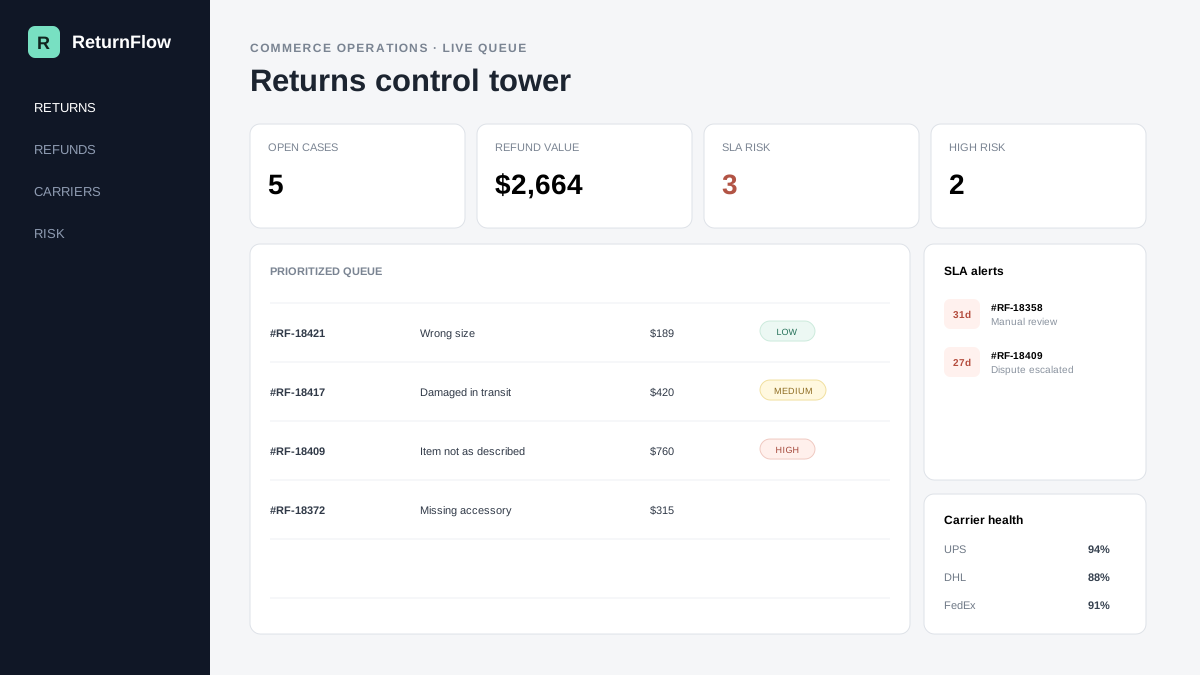
A live returns-and-refunds operations console designed around queue triage, refund exposure, SLA risk, carrier state and manual approval decisions for a high-volume commerce team.
A realistic product problem, not a decorative dashboard brief.
Returns teams juggle customer reasons, order value, case age, carrier status and fraud risk at once. The main challenge is helping an operator decide what deserves attention first without hiding the context needed before money moves.
Product framing, interface design and working prototype.
I defined the triage model, designed the queue and case-detail experience, implemented working filters and sorting, and built a clear approval state so the prototype behaves like an operations tool rather than a static admin mockup.
The interface is organized around decisions and state changes.
The concept is intentionally interactive so the design can be judged against a real task flow instead of only a polished screenshot.
Open-case count, refund value, SLA risk and high-risk case count summarize the current filtered queue.
Status, risk, search and value/age sorting let operators move between policy, urgency and financial exposure.
The drawer combines reason, value, age, carrier, SKU, risk rationale and activity history in one review surface.
Approval changes the case state visibly so the primary action has a clear, durable outcome in the prototype.
System choices are tied to operational use.
The goal is not to claim invented conversion or efficiency gains. The case shows the reasoning and interaction model that can be evaluated directly in the live prototype.
Age thresholds, risk labels and SLA alerts reinforce each other so urgent cases are not dependent on one visual treatment.
Refund value sits beside risk and policy state rather than being treated as a standalone amount.
Secondary attributes collapse on smaller viewports while the fields needed for triage stay visible.